
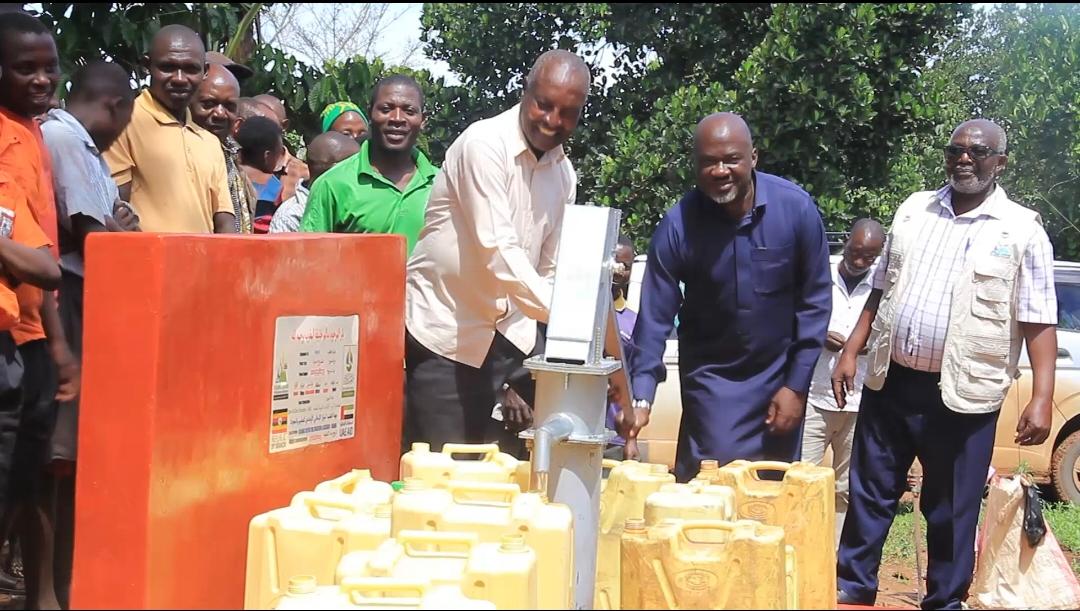
Weeks after reports highlighted a worsening water crisis in Bukomansimbi District, relief has started reaching affected communities as non-governmental organizations roll out a borehole construction initiative to improve access to safe water.
The intervention, led by the Islamic Center Education and Research in partnership with Dar Al Ber Society, is already transforming lives in Bukomansimbi North, where several villages have long struggled with unsafe and unreliable water sources.
The initiative is spearheaded by Hajji Muhammad Kateregga, the former LCV chairperson of Bukomansimbi District.
According to Kateregga, the project aims to address the urgent need for clean water by drilling at least 20 boreholes across the constituency, with seven already completed.
“We could not sit back after seeing the suffering our people were going through. Access to clean water is a basic necessity, and this project is meant to restore dignity and improve health in our communities,” Kateregga said.
The first phase of the project has benefited villages including Kasaka, Kawoko, Kyaziiza, Busabaala, Kyabamuyigga, Ggongwe, and Kakindu, where residents had previously relied on contaminated sources such as dams and shallow wells.
For many households, the arrival of boreholes has brought visible relief and renewed hope. Residents say they had endured years of walking long distances in search of water, often exposing themselves to waterborne diseases and losing valuable time that could otherwise be spent on productive activities.
“We used to walk long distances to fetch dirty water, and our children would often fall sick. Now we have clean water nearby, and life is changing,” residents said.
Kateregga emphasized the importance of community cooperation, urging residents to support the initiative by providing land for borehole construction and safeguarding the facilities.
“This is a community effort. We ask residents to work with us by offering land and protecting these water sources so that they serve generations to come,” he added.
While the immediate focus is on water access, Kateregga revealed that the organizations behind the project have a broader development vision for the area.
“We are not stopping at water. We plan to expand into healthcare and education so that the people of Bukomansimbi North can develop and compete with other regions,” he said.
The intervention follows mounting concern over severe water shortages in Bukomansimbi North Constituency, where residents in several sub-counties had been forced to depend on unsafe water sources.
Local leaders and development partners have faced increasing pressure to respond, with the borehole project now seen as a timely and practical solution.
Community members have expressed gratitude, describing the initiative as a long-awaited intervention.
“We are very thankful. This project has brought back hope to our villages. We only ask that it continues so others can also benefit,” residents said.
As plans for additional boreholes progress, stakeholders emphasize that sustained success will depend on continued collaboration between communities, local leaders, and development partners.
If fully implemented, the project could significantly reduce water-related challenges in Bukomansimbi and serve as a model for similar interventions in other underserved districts.
